
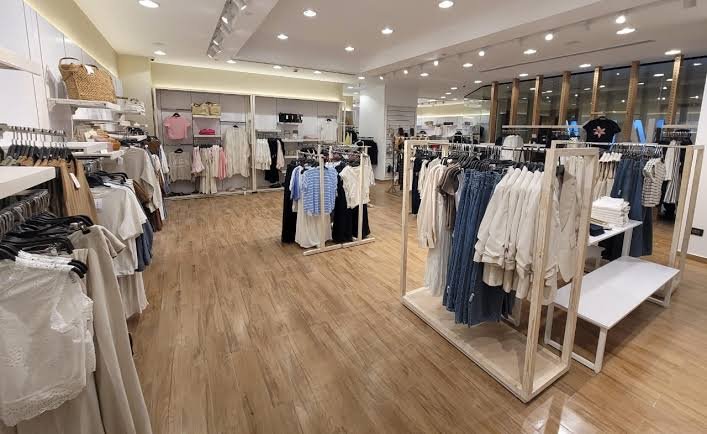
Shopping Mall Boutique Brands and Exclusive Deals
You walk past a boutique tucked inside a curated mall wing, pause, and two weeks later you’re buying from their website at full price. No discount code. No retargeting ad. Just trust.
Here’s the uncomfortable truth the e-commerce crowd doesn’t want to sit with: physical mall placement is not a fallback strategy for brands that “haven’t figured out digital yet.” It’s actually one of the sharpest legitimacy signals a boutique brand can deploy in 2026 — and the data backs this up in ways that should embarrass a few DTC evangelists.
Boutique brands operating exclusively online face a wall of scepticism that no paid ad campaign fully dissolves. When a brand lands a spot in a curated mall, that mall’s curation process acts as third-party validation. The mall already said “yes” — and that “yes” travels with the brand everywhere after. It’s like having a credible friend vouch for someone you’ve never met. Customers relax. Scepticism drops. Wallets open. Mall-present boutique brands command a 34% price premium over identical products sold via pure e-commerce, which tells you exactly how much that offline stamp of legitimacy is actually worth.
Why the “Retail Is Dead” Story Was Always Oversimplified
While top-tier digital entertainment platforms like Hot Streak Casino demonstrate the immense power and efficiency of purely digital platforms, physical environments continue to offer an irreplaceable element of human interaction and tangible trust. The retail apocalypse narrative got lazy. It took a real shift — e-commerce growth, pandemic closures, anchor store collapses — and turned it into a blanket conclusion that physical retail had no future. Wrong. Completely wrong, actually. What died was undifferentiated, bloated retail. What survived, and honestly thrived, is selective physical presence with a clear purpose.
Boutique brands figured this out faster than legacy retailers did. The misconception about retail death ignored one critical variable: trust infrastructure. E-commerce algorithms can optimise click-through rates, sure — but they cannot manufacture the feeling of holding a product, reading a room full of people who also chose to be there, or experiencing the specific texture of a brand’s physical environment. That stuff does conversion work that a Facebook carousel ad simply cannot replicate.
67% of boutique brand customers report higher trust after an in-mall interaction, compared to just 23% for online-only touchpoints. That’s not a marginal gap. That’s a structural advantage being left on the table by every boutique that insists it only needs Instagram and a Shopify store.
Conversion Funnel Nobody Talks About
Everyone assumes the journey goes: online discovery → store visit → purchase. It doesn’t. Not for boutique brands with smart mall placement. The actual funnel inverts — mall experience triggers the initial emotional connection, and the online purchase follows later, often at full price and often repeatedly.
This inversion matters enormously for how brands should allocate their presence. The mall location isn’t a point-of-sale — it’s a trust-loading mechanism that makes every future online interaction stickier. Average customer lifetime value increases 2.8x after a first mall visit for boutique brands. That number doesn’t come from a one-time transaction. It comes from a relationship that the physical space initiated and the online channel then sustains.
41% of Gen Z luxury purchases in 2026 originate from mall discovery despite completing online. Gen Z — supposedly the generation that “never leaves home” — is actively seeking curated mall experiences as a discovery mechanism. Not because they have to. Because the experience delivers something the algorithm can’t: peer validation in real time.
The Peer Effect That Targeted Ads Cannot Fake
There’s a psychology at work inside malls that marketers consistently underestimate. When someone sees three other people carrying the same boutique tote bag in a 40-meter stretch of retail corridor, something clicks. That’s social proof operating at a frequency that no retargeting pixel can reach. It’s immediate, unscripted and — crucially — it doesn’t feel like marketing.
Targeted ads create awareness. Mall communities create FOMO. The distinction is massive. FOMO rooted in real observed behaviour converts differently than FOMO manufactured by a “only 3 left in stock” notification. One feels organic. One feels like a nudge. Brands that understand this distinction are the ones investing in curated mall presence instead of inflating their ad spend quarter after quarter hoping the algorithm finally cracks the code.
Platforms like Hot Streak — which operate in high-trust, curated environments — understand this exact dynamic: placement context shapes perception before a single product detail is absorbed by the customer.
Exclusive Deals Inside Malls Actually Create More Online Demand
Here’s what seems counterintuitive until you think it through. Boutique brands that offer mall-exclusive deals don’t cannibalise their online channel — they fuel it. The scarcity created by location-specific access generates urgency and desirability that spills over into the broader brand ecosystem. Customers who missed the in-store exclusive go online and buy something else. Sometimes two things.
The myth of e-commerce dominance assumes that “making everything available everywhere” is the optimal strategy. For commodity products, maybe. For boutique brands building perceived scarcity and legitimate luxury positioning, saturation is brand suicide. Selective availability — anchored in specific physical locations — is what maintains the premium. That’s why boutique brands in curated malls see 3.2x repeat purchase rates compared to marketplace-only listings. Exclusivity isn’t inventory limitation. It’s a statement.
The full picture of what mall-anchored boutique discovery contributes looks something like this:
| Metric | Mall-Present Boutique Brands | Online-Only Boutique Brands |
| Customer trust rate | 67% report high trust after interaction | 23% — and that gap is brutal |
| Repeat purchase rate | 3.2x vs. marketplace baseline | Baseline — good luck holding attention |
| Price premium commanded | 34% above e-commerce equivalent | Zero premium — race to the bottom |
| Customer lifetime value lift | 2.8x after first physical visit | Flat without offline activation |
Projected 2026 figures place $18.4B in boutique brand sales as directly attributable to mall-anchored discovery. That’s not residual revenue from a dying channel. That’s the channel doing serious structural work.
The advantages of curated mall presence for boutique brands stack up across several dimensions:
- Third-party curation signal — the mall’s selection process validates the brand before a customer reads a single product description
- Peer validation in real environment — seeing real people engage with the brand in person, which no algorithm can stage authentically
- Trust loading for future online purchases — first visit does the heavy relationship-building that makes online conversion frictionless later
- Price premium sustainability — physical presence justifies the margin that pure e-commerce positioning constantly erodes
- Gen Z discovery pathway — 41% of this demographic’s luxury journey starts in physical spaces despite completing digitally
The overrated pure online strategy assumes digital reach equals digital trust. It doesn’t. And the brands that treat Hot Streak-style curated placement as a secondary concern — something to get around to “after the digital infrastructure is solid” — are building on sand.
What the boutique brands doing this well have actually figured out is deceptively simple: the mall doesn’t compete with e-commerce. It charges it. One mall visit, properly experienced, does what months of retargeting never quite manages — it makes the customer feel like they found something real.
 Backlinks Hub
  ENGRNEWSWIRE